
How to Establish a Company in Egypt: A Legal Guide
Establishing a company in Egypt is a strategic step that requires careful legal planning and a clear understanding of the applicable laws and procedures. Proper preparation from the beginning helps entrepreneurs avoid delays, reduce risks, and ensure full compliance with Egyptian regulations.
Step 1: Choose the Appropriate Legal Structure
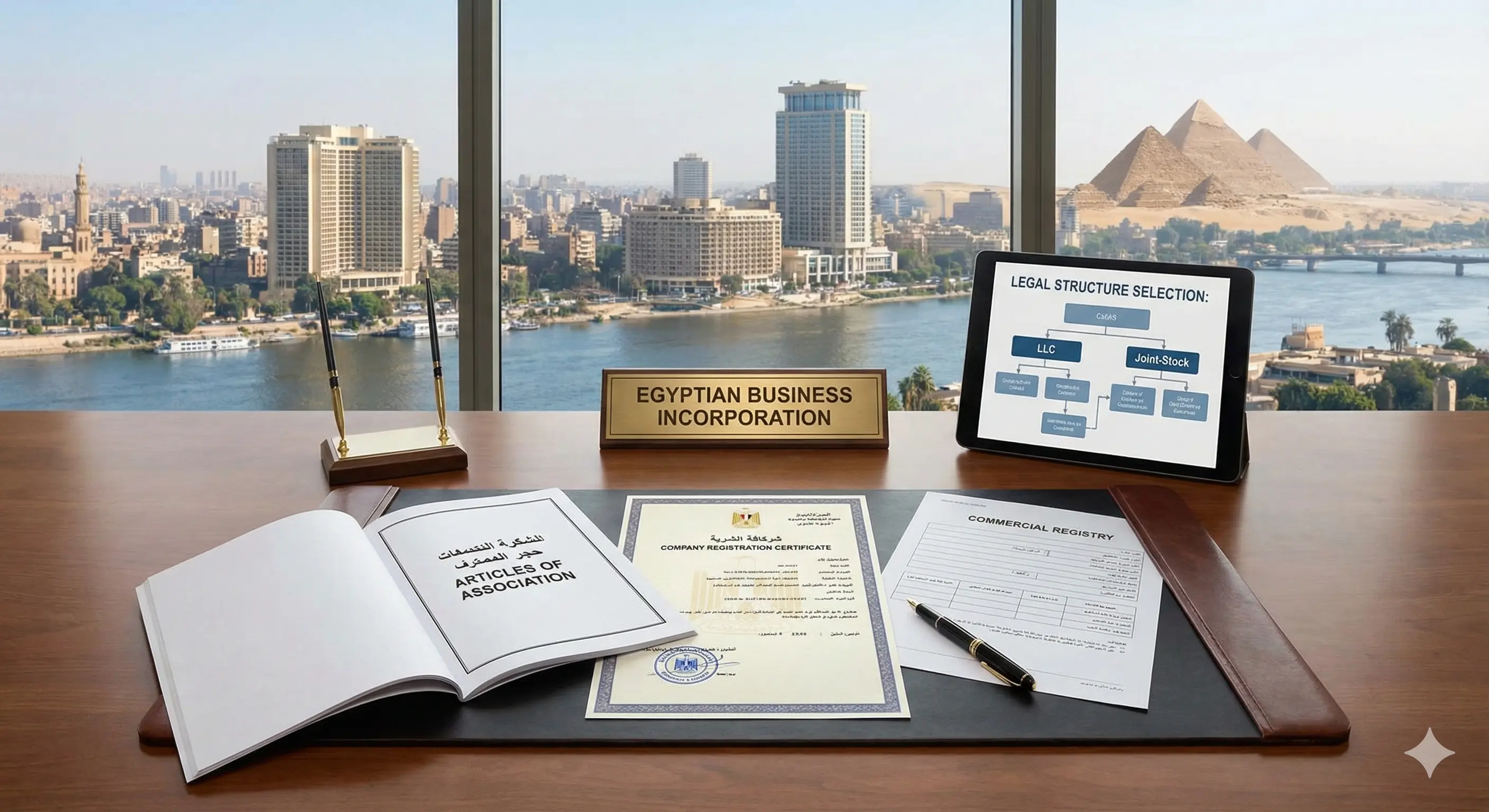
The first step is selecting the legal form of the company. Common structures in Egypt include sole proprietorships, limited liability companies (LLC), and joint-stock companies. Each structure differs in terms of liability, capital requirements, management, and taxation. Legal consultation is essential to determine the most suitable structure for the nature and scale of the business.
Step 2: Define Business Activities
Clearly defining the company’s activities is a critical requirement during the incorporation process. Certain activities may require special approvals or licenses from regulatory authorities. Proper classification of activities ensures that the company operates lawfully and avoids future compliance issues.
Step 3: Prepare Incorporation Documents
Incorporation requires preparing and reviewing essential legal documents, including the articles of association and shareholder agreements. These documents define ownership, management authority, profit distribution, and dispute resolution mechanisms. Accurate drafting helps prevent internal disputes and protects the rights of all parties.
Step 4: Registration with Relevant Authorities
Once the documents are prepared, the company must be registered with the competent authorities, including the commercial registry and tax authorities. This step also involves obtaining a tax card and registering for value-added tax (VAT), if applicable.
Step 5: Open a Corporate Bank Account
Opening a bank account in the company’s name is a necessary step to deposit capital and manage financial transactions. Banks may require specific documents and approvals depending on the company’s legal form and activities.
Step 6: Obtain Required Licenses and Permits
Some business activities require additional licenses or permits from specialized authorities. Ensuring that all necessary approvals are obtained before commencing operations is crucial to avoid penalties or business interruption.
Step 7: Ongoing Legal Compliance
After incorporation, companies must continue to comply with legal and regulatory obligations, including annual filings, tax submissions, labor law compliance, and corporate governance requirements. Continuous legal support helps maintain compliance and supports business growth.
Conclusion
Establishing a company in Egypt involves more than administrative procedures; it requires a solid legal foundation. Seeking professional legal guidance throughout the incorporation process ensures compliance, protects interests, and sets the business on a clear path toward sustainable success.


